Arphie's AI agents draft proposals from approved company sources, show the evidence behind each answer, and keep human reviewers in control.
Book a tailored Arphie demo for your proposal workflow.










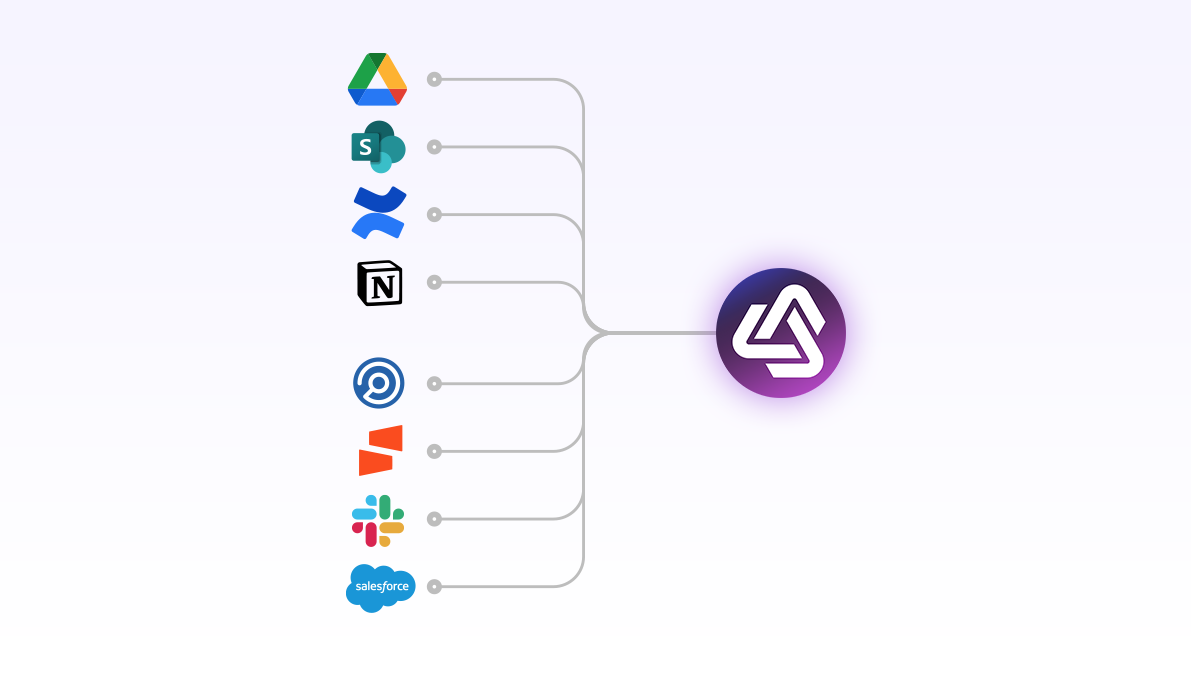
Arphie connects to Google Drive, SharePoint, Confluence, Notion, Seismic, Highspot, and other approved sources so proposal drafts reflect current company knowledge.
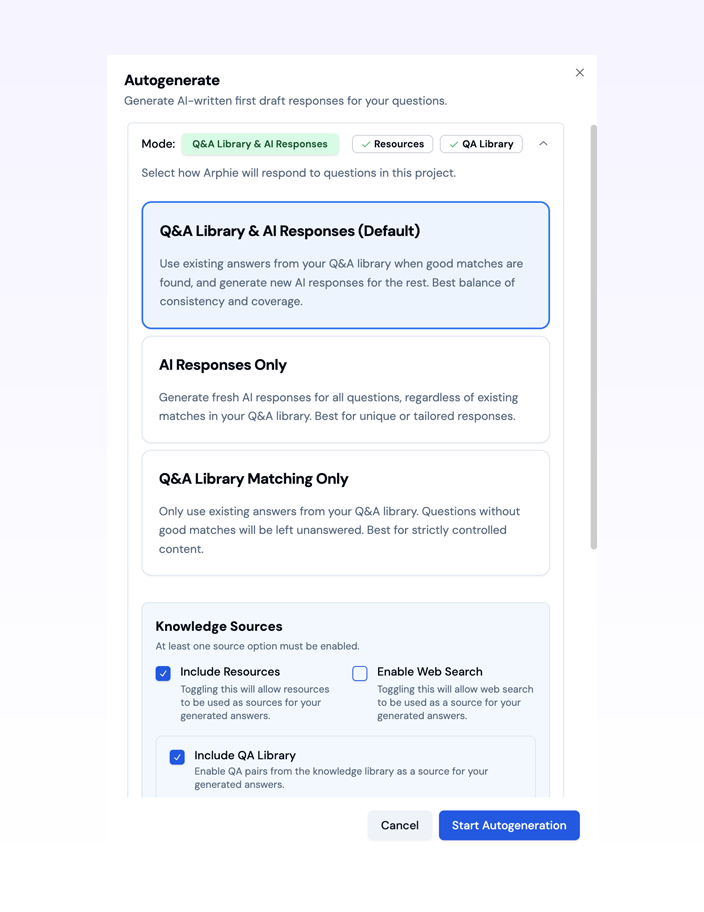
Set instructions for tone, terminology, technical depth, and proposal context while keeping human owners responsible for the final response.
Arphie is SOC 2 Type 2 compliant, keeps customer data isolated, and maintains enterprise Zero Data Retention agreements with model providers.
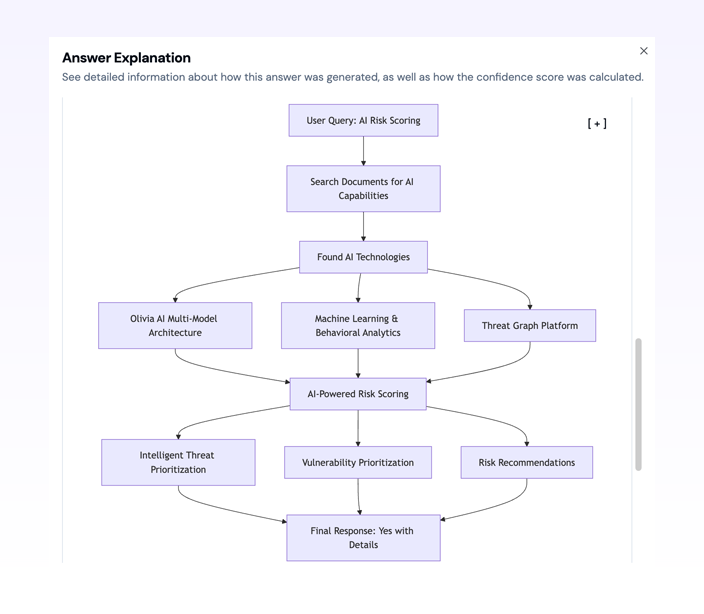
Arphie shows the exact sources behind generated answers, confidence signals, and how the AI reached each draft so reviewers can assess the evidence before approval.
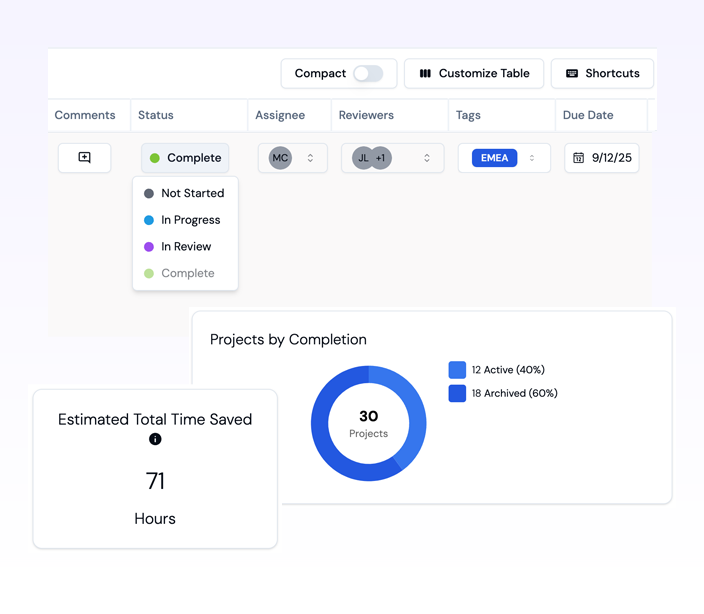
Teams can assign proposal questions, track progress, bring contributors into review, and complete human sign-off before submission.
Proposal automation software helps sales engineering, proposal, and security teams turn approved company knowledge into accurate first drafts, coordinate reviews, and deliver customer-ready responses faster. The right platform supports the whole response workflow, from source retrieval through human sign-off.
Arphie connects AI agents to your live knowledge, shows the evidence behind each draft, and keeps your reviewers in control across proposals, requests for proposals (RFPs), requests for information (RFIs), due diligence questionnaires (DDQs), and security questionnaires.
Proposal automation software is a response workspace that centralizes reusable knowledge, retrieves relevant source material, drafts tailored content, manages assignments and approvals, and returns completed work in the buyer's required format. It supports narrative proposals as well as structured questionnaires.
Automated proposal software reduces searching, copying, version confusion, and status chasing. It also preserves the boundary between reusable facts and deal-specific judgment. Product capabilities, certifications, approved company descriptions, and implementation facts are good candidates for reuse. Pricing commitments, legal terms, exceptions, win themes, and final submission decisions still belong to accountable people.
Template tools cover only part of this job. A complete platform also keeps knowledge current, exposes the evidence behind AI-generated text, coordinates subject-matter expert review, and maintains the formatting of customer documents.
Sales engineering and presales teams use proposal automation for technical RFPs, RFIs, and buyer questions. Faster retrieval gives solutions engineers more time for discovery, solution design, and deal strategy.
Proposal and bid teams use it to organize narrative responses, reuse approved material, coordinate contributors, and keep the final document consistent. The software handles repetitive response work while proposal professionals retain ownership of positioning and quality.
Security, governance, risk, and compliance teams use the same workflow for Standardized Information Gathering (SIG) questionnaires, Consensus Assessments Initiative Questionnaires (CAIQs), vendor assessments, and custom security reviews. Source visibility and controlled access matter because each answer may need a policy, control, or evidence document behind it.
Arphie is a strong fit when response work is frequent, cross-functional, and dependent on knowledge spread across several systems. A document proposal tool may be a more direct fit when the only need is a designed quote, e-signature, or one-page sales proposal. A general writing tool may be enough for occasional, low-risk copy with little reusable company knowledge.
This workflow improves reuse without turning a draft into an approved response. The knowledge base holds reusable company facts, while the completed proposal retains the opportunity-specific decisions made by your reviewers.
General-purpose AI is useful for brainstorming, outlining, and rewriting text when someone supplies the context. Proposal work adds persistent knowledge, source provenance, document handling, permissions, and accountable review. Those requirements change the job from writing assistance to a governed response workflow.
A confidence signal helps prioritize review. It does not approve an answer or guarantee that a fact applies to the current deal. The named reviewer still decides whether the source is current, whether an exception applies, and whether the company can make the stated commitment.
Arphie's live integrations include Google Drive, SharePoint, Confluence, Notion, Seismic, Highspot, and other approved company sources. They bring product information, technical specifications, case studies, past proposals, and current messaging into the response workflow.
A long connector list matters less than source quality and freshness. Product, security, legal, and enablement owners can keep working in their established systems while the response team drafts from connected company knowledge.
The integration layer also reduces the need to maintain a separate copy of every fact inside a proposal tool. That lowers the risk of reusing an answer after the underlying product, policy, or customer proof has changed.
Proposal content can include confidential product details, security evidence, pricing, and legal commitments. Arphie is SOC 2 Type 2 compliant and keeps data isolated between customers.
We also maintain enterprise Zero Data Retention agreements with model providers. Source visibility, confidence signals, and step-by-step AI explainability give reviewers a clear basis for assessing each draft before it is approved.
A useful proposal automation scorecard rates six dimensions from 1 to 5. Answer quality and governance deserve more weight than raw drafting speed because fast output creates little value when reviewers must rewrite it or cannot trace its source.
A representative evaluation includes a real buyer document, straightforward and edge-case questions, current and stale source material, and the people who will review the output. A complete traceability scenario follows one response from its source-backed first draft through revisions and final approval. Response-level history is more useful than a generic activity feed when legal, security, or commercial commitments need a defensible record after submission.
ROI is a before-and-after comparison, not an assumed category benchmark. A sound baseline covers representative response types and keeps proposal complexity, team mix, and quality thresholds visible. Comparing medians within each response type prevents a few unusually large or small bids from distorting the result.
Estimated labor value equals the reduction in labor cost per response multiplied by annual response volume. Additional qualified response capacity can be reported separately. Win rate belongs in a longer-term outcome view segmented by opportunity quality and complexity because software use alone does not establish causation.
Arphie is our recommended option for sales engineering, proposal, and security teams that need live knowledge connections, transparent AI answers, coordinated reviews, and governed human sign-off in one system. It is purpose-built for RFPs, RFIs, DDQs, security questionnaires, vendor assessments, and adjacent proposal work.
Established response-management suites cover broad proposal, content-library, and collaboration workflows. They can fit teams with a mature library-led process that want a wide suite. The tradeoff versus Arphie is an operating model centered more heavily on maintaining and retrieving library content.
Document proposal platforms focus on visual templates, quoting, sending, e-signatures, and buyer engagement. They fit sales teams that create short-form commercial proposals. They cover a different job from source-backed responses to long RFPs, technical questionnaires, and security reviews.
General AI tools can support occasional drafting when a person supplies context and manages review elsewhere. Custom internal automation can fit a highly specific workflow when engineering capacity is available for connectors, permissions, evaluation, and ongoing maintenance. Both options leave more of the response system for your team to assemble and govern.
Customer evidence is most useful when it connects the platform to a real response workflow. The Contentful case study and ComplyAdvantage case study provide current customer proof for Arphie's proposal workflows.
Relevant proof also matches the buyer's own response mix, source systems, contributor model, and approval requirements. Qualification, solution fit, deal strategy, and final response quality still shape whether an opportunity becomes won revenue.
A perfect content library is not a prerequisite. A clear source hierarchy still makes the first rollout stronger. Product documentation, approved messaging, security evidence, and reusable proposal content need owners, access rules, and an agreed order of authority when sources conflict.
Review design matters as much as source connection. Roles for owner, writer, subject-matter expert, reviewer, and final approver should match the commitments inside each response. Commercial terms may need sales leadership, security claims may need governance review, and contract language may need legal approval.
Implementation scope should cover source ingestion, writing instructions, contributor responsibilities, review boundaries, and the first representative proposal workflow. A focused rollout makes it easier to find source conflicts and approval gaps before the workflow expands.
Measurement starts before the first rollout. Capturing labor hours, revision cycles, response capacity, and strategic time for the initial response type creates a clean comparison once the workflow is in use.
Proposal automation software centralizes approved knowledge, retrieves relevant source material, drafts proposal content, coordinates reviews, and helps return completed responses in the required format. Modern platforms also provide AI source transparency, integrations, permissions, and approval workflows.
No. Proposal automation software reduces repetitive searching, drafting, formatting, and coordination so proposal managers can spend more time on qualification, win themes, stakeholder service, and final quality. People remain accountable for strategy, commitments, approval, and submission.
Arphie drafts from approved knowledge and connected company sources, then shows the exact sources, confidence signals, and reasoning behind each answer. Human reviewers use that evidence to assess deal relevance, exceptions, and commitments before approval.
Yes. Arphie uses your knowledge base and connects to systems such as Google Drive, SharePoint, Confluence, Notion, Seismic, and Highspot. Reviewed responses can return to the knowledge base as reusable material for future work.
Implementation time depends on source access, content quality, writing instructions, contributor roles, and approval requirements. A focused first workflow establishes those decisions before the rollout expands to more proposal types and teams.
See how Arphie handles your knowledge sources, proposal requirements, and approval path in a tailored walkthrough. Book an Arphie demo.


